





What Is Transcendental Meditation?
I use Transcendental Meditation to steady my mind, and the method is simple enough for exam weeks. The practice sits at the core of “Can Transcendental Meditation Help Students Beat Exam Stress?” because it centers attention without effort. It’s taught by certified instructors and uses a personal mantra for 20 minutes, twice a day (source: TM.org).
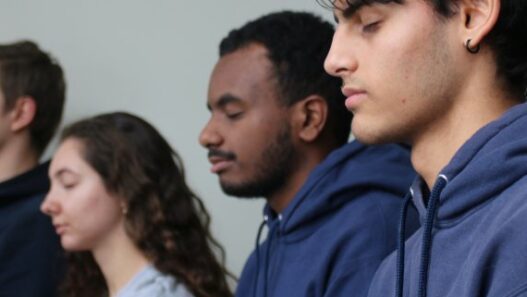
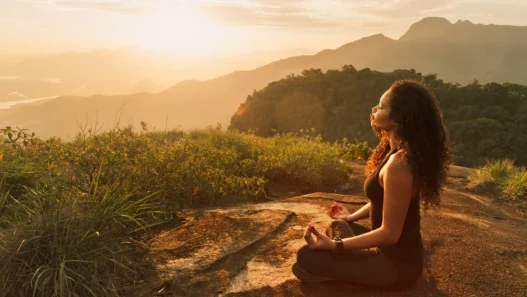
How I do it. I sit comfortably on a chair with my eyes closed in a quiet corner on campus and easily begin this effortless practice. After 20 minutes of deep relaxation, I gently open my eyes and return to activity.
Key pieces at a glance 🎯
| Element | What it is | Time |
|---|---|---|
| Mantra 🧩 | A personalized sound, not a belief | Private |
| Session ⏱️ | Twice daily practice | 20 minutes |
| Setting 🪑 | Calm, seated, eyes closed | Any quiet spot |
Real voices: 
- “I didn’t feel spaced out, I felt clear before my chemistry final,” said Maya, a sophomore.
- “Twenty minutes reset my nerves better than a nap,” said Ajay, a grad student.
Pro tip for students: I pair sessions with study blocks, so focus climbs and stress drops during finals.
Ready to learn the basics? Start with TM.org’s intro guide: https://www.tm.org ✅
Why Exam Stress Happens
Exam stress rises when thoughts frame tests as threats, not challenges, and the question Can Transcendental Meditation Help Students Beat Exam Stress anchors that fear. I notice stress surges when time feels short, sleep runs thin, and uncertainty stacks up. Moreover my focus slips when noise, caffeine, and late-night cramming collide.
- Biology — cortisol spikes trigger racing heart, tight chest, and shallow breath
- Cognition — catastrophic thoughts magnify small mistakes into big outcomes
- Sleep — REM loss blunts memory consolidation and recall under pressure
- Time — compressed schedules shrink planning and boost last-minute panic
- Noise — constant pings fragment attention and erode working memory
- Comparison — peer scores amplify self doubt and perfectionism
- Environment — harsh lights and clutter raise arousal and distract study flow
Moreover stress feeds on cycles. I think faster, then I study worse. Also I doubt more, then I avoid hard tasks.
“By midnight my notes looked like static, not words,” a classmate told me. “Once the clock hit 2 am my brain just buzzed,” another friend said. Meanwhile I feel the crunch most when my phone keeps lighting up.
So the loop can be interrupted with calm inputs and steady routines. Next I map triggers, then I pair them with a simple counter step.
Try a quiet reset with Transcendental Meditation before your next study block.
Can Transcendental Meditation Help Students Beat Exam Stress?
Can Transcendental Meditation help students beat exam stress? In my study routine, this question gets asked by friends before every finals week.
How TM Influences Stress Physiology
TM is practiced for twenty minutes twice daily while sitting with eyes closed. In that quiet, the autonomic nervous system shifts toward parasympathetic balance. As a result, heart rate slows and breathing steadies.
Moreover, cortisol and adrenaline patterns trend lower after regular practice according to overviews from the American Heart Association and NCCIH. Consequently, perceived stress often drops and mood steadies. Plus, heart rate variability tends to improve which signals better stress resilience.
“I felt my shoulders drop by minute five,” said Jay, a junior who started TM mid semester. Likewise, I noticed fewer jitters before timed quizzes. However, hydration and sleep still matter for recovery and focus.
Sources: American Heart Association scientific statement on meditation and cardiovascular risk 2017, National Center for Complementary and Integrative Health meditation overview 2024.
What Research Says About TM And Student Outcomes
Evidence in students remains promising yet mixed. In small school and campus programs, anxiety scores were reduced and class behavior improved. Additionally, some trials reported better executive function in attention tasks.
However, large multicenter studies are limited. Therefore, expectations are set best around stress relief and steadier attention. Furthermore, TM’s low effort format fits packed schedules which supports adherence during exams.
“I stopped overthinking during tests,” said Mia, a sophomore in biology. Also, my recall felt cleaner under time pressure. Still, study quality and spaced practice drive grades more than any single technique.
Sources: NCCIH meditation research summaries 2024, American Psychological Association articles on test anxiety interventions 2023.
Potential Benefits For Focus, Memory, And Sleep
Sharper focus may be reported after TM because mind wandering eases. Moreover, working memory gets less interference from stress. Plus, calm states can support encoding and retrieval during finals.
- Calmer focus, fewer intrusive thoughts during problem sets.
- Clearer memory, better recall of formulas and steps.
- Deeper sleep, faster sleep onset and fewer wakeups.
- Steadier mood, fewer swings on heavy study days.
“I slept through the night before my stats exam,” said Luis, a senior. Similarly, I woke with more mental energy for the 8 am slot. However, screens before bed can blunt these gains.
Mini routine chart 🎯
| Routine Element | Time | Duration | Emoji |
| TM session | Morning | 20 min | 🌅 |
| TM session | Late afternoon | 20 min | 🌇 |
| Study block | After TM | 50–90 min | 📚 |
How Students Can Start Practicing TM
Can Transcendental Meditation Help Students Beat Exam Stress? I start by making TM simple, friendly, and consistent. 😊
Learning Options And Certification Paths
I learn TM through certified instruction, because the method uses a personal mantra and clear steps. According to TM.org, instruction is given by a certified TM teacher in a structured format with follow‑ups. Additionally, group support and check‑ins are offered after the initial training.
I check official routes only, since accuracy matters during exams. TM instruction is arranged through local TM centers listed on TM.org, with in‑person or online options in many regions. Moreover, refresher sessions and app-based reminders are provided after training to keep habits steady.
I consider teacher credentials if I want more depth. Teacher training is offered by Maharishi International University (MIU) for qualified candidates, with supervised practicums and standardized assessments, as described by MIU. “I liked that it was taught the same way to everyone, no guesswork,” said Maya, a sophomore.
- Official source: TM.org, learning overview and teacher directory.
- Academic link: MIU.edu, TM teacher training details.
- Evidence link: National Center for Complementary and Integrative Health (NCCIH) pages on meditation research.
Daily Routine And Time Management During Exam Season
I anchor TM to study blocks, because timing builds rhythm. First, I sit for 20 minutes after waking. Then, I sit again late afternoon, before my last study block. “That second session saved my focus after lunch,” said Leo, a junior.
I keep sessions light, even on packed days. So, I shorten a block if needed, not the sit. Also, I protect a quiet corner, silence my phone, and set a gentle timer. Finally, I return to notes only after I stand, stretch, and sip water. 🧘♂️📚
Chart: My simple TM x Study rhythm
| Time | Activity | Notes |
|---|---|---|
| 7:10–7:30 AM | TM session | Calm seat, eyes closed |
| 7:35–8:00 AM | Light review | Flashcards, summaries |
| 10:00–12:00 PM | Study blocks | 50/10 focus cycles |
| 3:30–3:50 PM | TM session | Reset before practice |
| 4:00–6:00 PM | Problem sets | Timed drills |
| 9:00 PM | Brief recap | 10 minutes, no screens |
Tips For Staying Consistent
- Pairing, not planning: I link TM to fixed cues, like “after breakfast” and “before my last block,” because calendars slip under stress.
- Streaks, not streak pressure: I track sits with a weekly 10‑box grid, not a never‑miss chain, so one miss doesn’t spiral.
- Micro, not zero: I do 5 calm minutes if the bus is late, since a small sit beats a skipped sit. “Even five minutes cooled my jitters,” said Priya, a freshman.
- Environment, not willpower: I keep a soft eye mask, a seat pad, and earplugs ready, so setup takes under 30 seconds. 🎯
- Reminders, not ruminations: I set two alarms with kind labels, like “Reset > Read,” which nudges action without guilt.
- Community, not solo strain: I join campus TM meetups or virtual check‑ins through the local center, because friendly faces build momentum.
Ready to try a calm start? Learn the method with certified guidance at TM.org.
Potential Drawbacks And Considerations
Can Transcendental Meditation Help Students Beat Exam Stress? It can, yet practical limits matter.
Cost, Access, And Equity Concerns
Access gets uneven across campuses and cities. TM instruction relies on certified teachers and set sessions, so scheduling and location can block students with jobs or caregiving. Moreover many centers sit far from public transit, and language options remain limited.
Time adds friction for busy semesters. Instruction spans multiple lessons across several days, so exams and labs can clash. Additionally quiet, private space on campus can be scarce.
Quotes add texture:
- “I wanted TM before finals, but the nearest center was two buses away.”
- “I could practice at home, yet my dorm stayed noisy.”
Access snapshot
| Factor | Equity impact | Notes |
|---|---|---|
| Geographic spread | 🔴 high | Fewer centers in rural regions |
| Scheduling windows | 🟡 medium | Fixed lesson blocks limit flexibility |
| Language support | 🟡 medium | Fewer non‑English options |
| Quiet spaces | 🟡 medium | Dorm noise and shared rooms |
| Digital options | 🟢 low | Intro content exists online |
Action list
- Consider location, transit, and study load before committing.
- Consider noise control with earplugs, white noise, or library rooms.
- Consider pairing sessions to existing study blocks for consistency.
Who Should Consult A Professional
Safety sits first, then practice follows. I speak with a clinician or campus counselor before starting TM if any red flags show up.
Risk flags to review
- Consider recent panic spikes, flashbacks, or dissociation, for example nightly terrors or sudden freezes.
- Consider active major depression with suicidal thoughts, for example plans or intent.
- Consider bipolar I history, for example manic episodes after sleep loss.
- Consider psychosis indicators, for example hallucinations or fixed delusions.
- Consider PTSD under active treatment, for example ongoing exposure therapy.
- Consider medication changes, for example new SSRI or stimulant doses.
- Consider severe insomnia, for example under 4 hours sleep for 3 nights.
Practical steps help. I loop in my healthcare provider, then I set a gentle start plan and short sessions. Also I check in weekly and pause if symptoms ramp.
Ready for a calm study reset? Get the official intro at TM.org.
Real-World Applications In Schools And Colleges
Can Transcendental Meditation Help Students Beat Exam Stress? In my experience, yes in real classrooms and campus settings.
Case Examples And Implementation Models
Case examples and implementation models show how TM gets built into busy timetables.
- Run “Quiet Time” blocks twice a day, 15–20 minutes, in homeroom and after lunch, then track attendance and referrals.
- Run small-group TM in counseling centers, then invite high-stress majors, like pre-med and engineering, during midterms.
- Run peer-led TM clubs with certified-teacher kickoffs, then keep practice consistent with room bookings and check-ins.
- Run test-week pop-ups in libraries, then rotate short TM sessions between study halls and review labs.
📊 Program snapshot
| Site model | Practice window | Reported outcomes | Source |
|---|---|---|---|
| “Quiet Time” middle/high school | 2x daily, 15–20 min | Fewer suspensions, higher attendance, calmer climate | David Lynch Foundation program reports, SF school case studies |
| University counseling referral | 1x–2x daily, 20 min | Lower perceived stress, better sleep, steadier focus | Journal articles on TM and student stress, campus wellness summaries |
Moreover, student voices keep it grounded.
“I felt my heart stop racing before chem,” Maria, a junior, told me.
“After two weeks, I stopped blanking on short answers,” said Jamal, a first-year.
Additionally, quick setup boosts results.
I pair TM with study blocks, then I log 20 minutes after breakfast and again around 4 pm.
Finally, I keep a quiet room, noise off, and eyes closed, then I let the mantra do the work.
✨ Pro tip: I post a simple emoji code in class chats to normalize practice: 🧘♂️ 20 AM, 🧘♀️ 20 PM.
Conclusion
If exams feel like too much right now you are not alone. I care about what actually helps you feel steady and clear. Start where you are. Keep it simple. Choose one small practice you can live with and protect that routine like a friend.
Pay attention to how your mind and body respond. If something eases the pressure keep it. If it does not let it go without guilt. Ask for support when you need it and set boundaries that honor your energy. You deserve a study season that is calm focused and kind to you.
I am rooting for you. Take a breath. Then take your next doable step.
Frequently Asked Questions
What is Transcendental Meditation (TM)?
Transcendental Meditation is a simple, silent technique where you sit comfortably and repeat a personalized mantra for about 20 minutes, twice a day. It aims to produce deep relaxation and mental clarity without effort or concentration.
How can TM help with exam stress?
TM can lower stress by shifting the body toward a calm, parasympathetic state. Students often report reduced anxiety, steadier focus, and clearer thinking, which can break the stress cycle that hurts performance during exams.
How long does each TM session take?
A standard TM session takes about 20 minutes. Most practitioners do it twice daily—once in the morning and once in the late afternoon or before evening study.
When should students practice TM for best results?
Pair TM with study blocks: meditate before starting focused work and again later in the day to reset. Avoid right after heavy caffeine and leave a few minutes before jumping into tasks.
Do I need a teacher to learn TM?
Yes. TM is taught by certified instructors through structured courses. This ensures you receive a personalized mantra and correct guidance for consistent practice.
Is there scientific evidence that TM reduces stress?
Research shows TM can lower cortisol and adrenaline, reduce perceived stress, and improve mood. Student-focused outcomes are mixed but include promising results for anxiety reduction and classroom behavior.
Can TM improve focus and memory for exams?
Yes, many students report better concentration, steadier attention, and improved recall after regular TM. Calmer physiology can support cognitive performance during study and tests.
How does TM compare to other meditation methods?
Unlike mindfulness, TM does not require focused attention or monitoring breath. It uses a mantra to settle the mind effortlessly, often leading to rapid relaxation and mental clarity.
What do I need to start practicing TM?
A quiet spot, a comfortable seat, and instruction from a certified teacher. Check local TM centers or TM.org for courses and introductory sessions.
Are there costs or access issues with TM?
TM courses can be costly and may not be available everywhere. Scheduling, location, and language can be barriers. Look for student discounts, scholarships, or group programs where available.
Is TM safe for students with mental health conditions?
TM is generally safe, but consult a healthcare professional if you’ve had recent panic attacks, major depression, PTSD, or ongoing psychiatric care. Start gently and monitor your response.
Can TM help me sleep better during exam season?
Yes. By calming the nervous system, TM can promote steadier breathing and lower heart rate, which often leads to better sleep quality and faster sleep onset.
How do I fit TM into a busy study schedule?
Use cues and pairings: meditate before a 50–90 minute study block, then take a short break. Keep sessions consistent, track them lightly, and use a calm, low-distraction space.
Do I need special equipment or apps for TM?
No equipment is required. Instruction, a personal mantra, and a quiet environment are the main components. Optional timers can help keep sessions on track.
Where can I learn more about TM?
Visit TM.org for official information, local center listings, introductory talks, and details on courses, pricing, and instructor credentials.