






By Adam Stone, Publisher, Originally published at The Examiner News
A few weeks into January, I faced a fourth-quarter, clock-ticking-down decision that felt like it could define the rest of my career—and my life.
Do I sign a contract to hand over my local journalism business to a new owner, or shatter hearts by extinguishing the print newspapers I’d spent nearly two decades obsessively building? 
It was early morning, and my wife, Alyson, an area public school teacher, was in the kitchen, scrambling to get out the door. But I stopped her cold, dropped to my knees, and asked her what the heck I was doing.
I was just hours away from inking a pact that would make me an employee-publisher of Examiner Media, the bite-sized business I’d founded on fumes 18 years ago this month. I had aggressively pursued a deal since last summer with a larger, highly reputable New York community newspaper publisher.
He would likely (and understandably) be royally pissed if I rebuffed the final offer after months of negotiations.
“Why am I giving away my company?” I pleaded to Alyson, feeling like I was experiencing the catalytic moment in a bio-pic about my life. “I know I don’t want to do this.”
After a little back-and-forth, she saw what I hadn’t been able to articulate and understood why I was reluctant to pull the trigger on what looked like a sensible plan. On paper, it was an attractive way to keep Examiner Media’s four print newspapers alive, ensure my loyal staff stayed employed, earn a decent living, and keep the community informed.
It would be a steady paycheck and the sensible choice—and also the fear-based decision.
Deep in my gut, I already knew what my subconscious had been whispering for months: the deal, with its theoretically reasonable but problematic non-compete clause, wouldn’t serve anyone (including me) in the long run, especially given our broken business model.
“Bet on yourself,” Alyson finally advised, inspired by a book she’d just heard about.
So I did, deciding not to sell, and to go all digital, with minimal revenue left for staff.
I stood up, steeled myself, and spent the coming days calmly making dozens of phone calls (with a brief flirtation of giving print one last Examiner-run gasp). I began unwinding and reimagining a local reporting product I had compulsively created and captained since 2007, triggering emotion and upheaval for my loyal employees, loving family members, and heartbroken readers like you.
Our bank account was nearly dry, and fundamental change was unavoidable. I also knew I wanted to spend my workdays writing, reporting, and editing—not managing, marketing, and selling, as I’d been doing since launching this idiosyncratic local media venture from the basement of our Mount Kisco condo.
And here’s the thing: while there were many reasons I could finally hear the voice in my head begging me to keep my editorial independence, one reason stood above the rest.
How did I summon the fortitude to plunge into a deep sea of unknown professional waters? Where did I find the clarity I’d been lacking?
Through an ancient human practice I had learned only weeks earlier at the local Transcendental Meditation (TM) center on Bedford Road in Katonah.
A Journalistic and Personal Project
In the months before I arrived at the meditation center, I was juggling a stressful family medical issue while negotiating the potential sale of Examiner Media. At the same time, in recent years, I had also been immersed in local reporting on wellness and personal growth—covering topics such as reiki at Northern Westchester Hospital and featuring area practitioners like Kristin Noël Raniola—while also knee-deep in what became a relatively high-profile investigation into the rancid impact of corporate medicine on our local healthcare system.
I was pretty darn exhausted.
To gain equanimity (and to put my money where my mouth was), I ultimately decided to commit regularly and publicly to a meditation practice.
Post-pandemic, meditation had lost much of its old stigma. If anything, it had gone mainstream—even cool—thanks in part to NBA legends like LeBron James, a spokesman for the Calm meditation app.
If I could play even a small part in helping vaporize lingering resistance among locals who would benefit, it seemed a worthy journalistic endeavor. I’d finally be armed with firsthand experience of what the many millennia of fuss was all about. (The practice’s roots are in Vedic tradition dating back thousands of years, helping practitioners access deep mental rest.)
I had dabbled with Sam Harris’s Waking Up app, recommended by my neighbor friend, and was listening to former ABC anchor (and area resident) Dan Harris’s masterful podcast, 10 Percent Happier, inspired by his book of the same name. But I became intrigued by something called Transcendental Meditation, or TM (“transcendental” here essentially just means going beyond ordinary thought to experience a quieter state of awareness).
A ’90s kid from Port Washington, my interest was piqued after hearing that Jerry Seinfeld and Howard Stern—two great ambassadors of the Long Island no-BS parade—were longtime practitioners. Granted, neither has exactly radiated monk-like serenity in their public lives, but if even those guys pointed to it as a superpower, maybe TM was legit.
I Googled, found the Westchester TM location in Katonah, and connected with Cheryl Smith Alvarez, the center’s director.
Our first session came in early January, part of my New Year’s 2025 resolution to give the practice a real chance.
Keystone Habit
Alvarez, 60, arrived in Westchester at the end of 2020, just as the pandemic peaked. She had packed up her life in Chicago and moved east to take over the center after longtime directors retired to Florida. Her background spans decades in wellness, nutrition, and holistic health.
In a recent phone interview, Alvarez shared that she had spent years in San Francisco exploring mindfulness and meditation across multiple traditions, and ultimately studied at Plum Village, storied Zen master Thich Nhat Hanh’s renowned monastic retreat center in the south of France.
But something was missing. While in Chicago in 2015, she discovered Transcendental Meditation.
“It was a wonderful experience,” she said, “really supplementing the prior decade of other forms of meditation practice.”
Those experiences shaped her holistic approach, as did her earlier work as a registered nutritionist.

But, perhaps more relevant to lots of you, TM ultimately helped her as a parent, allowing Alvarez to be more centered for herself and for her daughter.
“It definitely gave me more bandwidth to deal with daily stress,” recalled Alvarez, whose young adult daughter is now a law school student. “As beautiful as parenthood is, it’s also challenging.”
And the benefits run far deeper than a rookie like me might initially consider.
If you’re grounded through meditation, you’ll naturally want to eat better, move your body, sleep properly, and generally embrace good living, Alvarez also observed.
“Those are all very important aspects of overall health,” the native Iowan said. “But for me, TM is the keystone habit. It sets the stage for all the other healthy habits to really stick.”
To Alvarez’s broader point, even before starting TM, mindfulness had nudged me toward better routines—immunity juice shots, cardio on our Pelaton, strength training at Genesis/Saw Mill Club, stretching, and eventually a Kachava shake every morning.
I used to get a ton of long, brutal colds but I’ve barely been even mildly ill since last spring, and on the rare occasion something feels like it’s coming on, a quick “flu bomb” drink seems to help knock it out.
That’s the kind of stuff I probably wouldn’t have stuck with before more mindful living, when I was less attuned to what my body needed.
‘Go-Go Grind’
A Sleepy Hollow resident, Alvarez has guided hundreds of locals through TM—healthcare workers, cops, veterans, firefighters, stay-at-home parents, retirees, and, now, even long-winded area journalists.
While the benefits are universal, practicing in a high-pressure suburb with competitive schools (right outside one of the world’s busiest cities) is distinct.
“So sometimes I feel like in metropolitan areas like New York and Westchester, you know, it’s kind of like, why would I stop?” Alvarez remarked in our phone interview when I asked about teaching in this region. “That’s the opposite of what we’ve all been conditioned to do. It’s that go-go grind, that hustle. But our meditation practice is going to give us more clarity, more creativity, more intelligence, more of that efficiency so we can get our job done, but at the same time not at the expense of our physical and mental health or our relationships.”
Importantly, Alvarez has also helped bring TM into the local medical community through the David Lynch Foundation’s Heal the Healers Now program, introducing the practice to staff at Northern Westchester Hospital in Mount Kisco, in collaboration with the broader Northwell Health network.
“It’s open to anyone that works in healthcare to really help them navigate their emotional stress of being a frontline caregiver,” she told me. “It was very difficult during the pandemic and so we started noticing these high levels of burnout and stress and PTSD. So [this gives] people a tool that is going to help them mitigate that extra stress and that demand.”
(Northern Westchester Hospital has long embraced holistic practices through its vibrant integrative health department. Alvarez has trained more than 110 NWH staff members over the past couple years—nurses, doctors, etc.—all free of charge.)
Minute to Learn, Lifetime to Master
I’m lucky to call Alvarez my teacher. But even the teacher-student framing might unintentionally make it sound like the practice is hard to learn. Quite the opposite. TM is super simple, yet there’s endless room to strengthen the mental muscle. I’m reminded of that great Othello game slogan: a minute to learn, a lifetime to master.
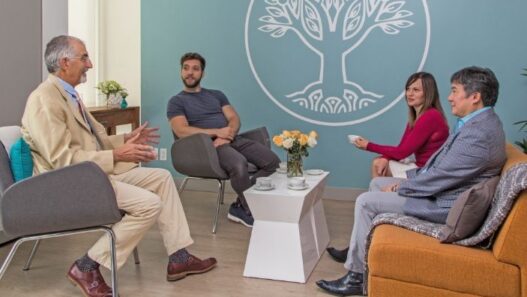
Despite the caveat, learning TM most definitely involves skillful, attentive teaching. The foundational education is divided into four sessions over four consecutive days, about 90 minutes each, with one-on-one and small group time.
In my Katonah center small group crew: a retiree, a working mom, a hockey dad, and me.
Across the four days, Alvarez delivered various practical lessons. She discussed how to weave meditation into busy schedules, what to expect from the mind during practice, as well as the tradition’s history, alongside some Q&A.
The first day ceremony to receive my mantra—the personal sound silently repeated during meditation—was in a quiet room in the back of the Katonah center, with a picture of Maharishi Mahesh Yogi behind us. (He famously taught TM to The Beatles in the late 1960s—and developed the modern Transcendental Meditation technique based on ancient Vedic practices.)
New York State of Mind
But let me quickly pause here in case any perceived counterculture vibes make you squirm in your seat. While I’ve been exploring and reporting on personal growth topics periodically for the last couple of years, most of my first four decades prepared me to wince at anything with even a faint whiff of the new-age.
As a dude from suburban Long Island, talk of inner stillness was a million miles from my upbringing. We competed in sports (and everything else), and were socially incentivized to have big egos, pretend emotions didn’t exist (except for bursts of anger) and trade verbal barbs.
We’re all products of our culture, and I’ve spent a wild amount of time watching, reading, and thinking about MLB, the NFL, the NBA (before they all got a little more in touch with their feelings), and the bloodiest of American sporting pastimes: national politics.
In other words, I wasn’t necessarily an obvious candidate, at least in my mind, for embracing Eastern approaches.
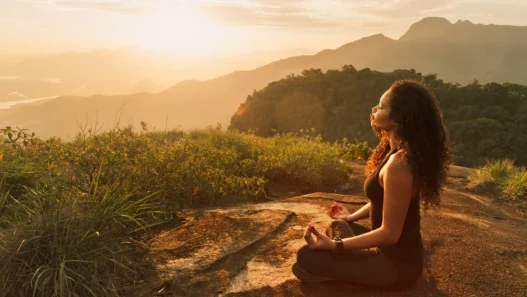
Yet here’s what’s also true: TM works for anyone willing to try it. You can be a laid-back free spirit, an intense jock, or anything in between. Sit quietly, close your eyes, repeat your mantra for 20 minutes twice a day, and it just works (it’s distinct from mindfulness practices that focus on observing thoughts).
It’s also worth noting that the mindset around a meditation practice is a little like the mindset needed for our physical exercise routines. It can take some discipline to actually get yourself moving, but almost no one regrets having exercised. And, perhaps unlike physical exercise for some, TM quickly becomes something practitioners tend to look forward to: an oasis of calm, giving your mind a little vacation.
The practice is also energizing, which is why TM is not practiced at bedtime. Think of it as a healthier alternative to your afternoon coffee. Not that I’ve given up mine.
Strength in Stillness
By the end of day four, we got graduation gifts from Alvarez, including a book by Bob Roth, CEO of the David Lynch Foundation and bestselling TM author. (The foundation, named after late filmmaker David Lynch of Twin Peaks fame, is pursuing the ambitious goal of making TM widely reimbursable by insurance.)
In Strength in Stillness, Roth shares a memorable metaphor: the ocean’s surface can be turbulent with waves, but its base remains beautifully calm. Our minds are similar. Thoughts may surge, but TM lets you access that steady core. Yet connecting to what advocates call pure consciousnesses is not about disengagement from life’s challenges. Rather, it seems to help us surf the waves in Olympic level flow.
Roth stresses in the book how there’s no spiritual component required, and shares stories of TM’s impact on people from every walk of life. At-risk inner city kids to celebrities like Michael J. Fox, who credited meditation with helping manage his Parkinson’s symptoms.
And people like legendary investor Ray Dalio, a billionaire who points to TM as the single most important reason for his success.
But closer to home, local names have also enjoyed profound benefits.
‘Kept My Mind Open Creatively’
I’ve recently gotten to know Chappaqua-based author and New York University journalism professor Steven Beschloss, who’s practiced TM since 2013, when he and his wife took the four-day course in Arizona.
At the time, he was juggling multiple creative projects and struggling to prioritize. TM helped him clear the mental clutter and focus on what mattered most. The result? He completed The Gunman and His Mother, his book on Lee Harvey Oswald, which was published just before the half century anniversary of the JFK assassination.
“Daily TM practice has become as important to my well-being as eating and drinking,” the award-winning journalist and filmmaker told me over text last week. “If I miss a day—a rare occurrence—I don’t feel well physically. There’s no doubt that this meditation has kept my mind open creatively, especially as my work life has grown more demanding.”
And decades of scientific research corroborates the anecdotal: TM produces brainwave patterns linked to calm and creativity, helping relax a nervous system that modern life so often leaves dysregulated—under assault from a relentless stream of politically-charged notifications, algorithmically engineered digital crack, and high-pressure personal and professional deadlines. The studies show how the practice helps improve heart health.
It’s also striking how meditation transcends traditional boundaries, from race and gender, to class and politics. (Although, in my view, clarity fosters compassion and centeredness, in contrast to political extremism, whether fueled by far-left or far-right hate.)
This column isn’t about TM being the best or only way. Other approaches—like concentration exercises or techniques such as thought-scanning—are beneficial in my book, with advocates highlighting the unique perks of each. TM simply worked for me: no special breathing, no pushing thoughts away, just an effortless way to let the mind settle, and its structure made it easier for me to stick with.
Refuel
The fee to learn TM is offered on a sliding scale and, in some cases, free for those in need. Once learned, you can return for free tune-ups or visit any of the hundreds of TM centers around the world.
Although I haven’t yet returned to the Katonah center since the four days in January, I’ve integrated the practice into daily life at home and on the road, using my TM-provided app’s timer in the mornings and late afternoons.
In fact, just before editing this section, I meditated on the couch with my two dogs curled up beside me. When I finished, my TM app reminded me with a quote: “rest is the basis of activity.” The commonsense line rang true. Rest isn’t indulgent. It energizes everything that follows.
Why not refuel to more fluidly confront life’s challenges?
I’ve gone from being a decent sleeper to a very good one, verified by my Fitbit data. I’m a better listener, more present, less irritable, and a more mindful writer. Emergencies, deadlines, and life’s aggravations rarely overwhelm me. (Although I do have my occasional freakouts.)
I’ve become a kinder family member and friend. But TM also helps in unexpected ways: with a clearer mind, I’m better at basketball, chess, video games and other small skills I hadn’t specifically expected to see enhanced from keener awareness.
I’m less argumentative but firmer in my convictions. Less drained by divisive politics but better equipped to participate in local life. More willing to take my foot off the gas and relax, not rushed by other’s unwanted expectations, while also feeling more connected when I do engage, cognizant of my actual needs.
Some scoff at motivation tied to performance, saying desire and striving undermine tranquility. I’m sympathetic to that framing in the abstract. But practically, if desire for self-improvement brings you closer to a quiet mind, it’s a good thing. It can even serve as a gateway to that purer, non-striving version of calm.
We’re not living in 18th-century Kyoto, Japan. We’re in Westchester County, NY, 2025. Meditation helps us function here, effectively and well.
When our website went down yesterday, attacked by bots, I wasn’t pleased. But I dealt with it deliberately with the help of our webmaster, absent any even mild sense of panic. It turns out that allowing for harmonious quiet serves as an antidote to cacophonous overwhelm.
As a journalist, TM has also deepened my preferred approach: not “How do I get the quickest scoop?” but “How do I report thoughtfully and guide readers to understand and act?”
This perspective informs our written stories, the national Sick Care podcast we’re hopefully helping to launch this fall, and shows up in subtle ways in The Examiner’s local audio reporting. (In fact, Alvarez will be a guest on our Local Matters Westchester show. She joined us yesterday for an interview. Be on the lookout for that episode next week!)

Into the Woods
After three quarters of a year of TM practice, I participated a few weekends ago in bestselling author and Mount Kisco resident Warren Berger’s research experiment for his upcoming book, Find Your Burren, about the link between nature and creativity. (I wrote a recent column about being one of his guinea pigs.)
I spent two hours in nature, then three hours in a workspace to see what creativity bubbled up, with a specific project in mind. For me, that meant walking at the local Westmoreland Sanctuary on a rainy recent September Sunday before retreating to an empty pizza parlor to begin crafting this very column you’re reading right now.
Because of TM and my heightened presence, I heard the birdsong better, appreciated the rain drizzling down, and soaked in the energy of the natural world—while contemplating how addicted we’ve all become to the internet over the past quarter century.
More to the point, tons of ideas for this piece naturally emerged.
It also hit me during that time at Westmoreland that those who think they cannot quiet their minds are often perfect candidates for profound results. I am now one of those people.
As a result, the last few months have been rich with professional and personal growth: from mentoring a ton of phenomenal reporter interns to strengthening connections with the people in my orbit. It’s even given me the mental space to imagine new permutations for my own career—like perhaps one day teaching journalism part-time in a college classroom, or finally writing that book.
But the benefits transcend accomplishments. In a world marked by challenges, TM has strengthened my ability, even as a newbie, to ride those waves with greater ease, in both the loudest and quietest moments of my days.
I now better understand all the recent scientific talk about the brain’s neuroplasticity, and how new habits can rewire our minds, and bring more peace to the way we walk through this sometimes thorny but always wondrous world.
Surprise Yourself
And as chance (or the universe) would have it, my father, a lifelong rationalist, decided to start TM training recently at Alvarez’s TM center in Katonah after hearing me talk about my experience in the winter.
“I just completed my first morning Transcendental Meditation,” he texted my sister and me, just as I was initially crafting the first draft of this piece at that empty pizza parlor in Chappaqua. “It was a good experience.”
“Wow,” my sister Laura said. “That is so cool. I can’t believe you are a meditator now.”
“I’m surprised myself,” our dad replied.
I hope a ton of you surprise yourselves too.
It will be one of the greatest gifts you ever give yourself, your loved ones, and our fractured but resilient Western world.
Anxious energy may be contagious, but so is calm.
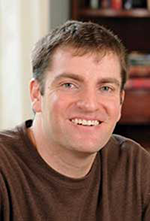
Adam has worked in the local news industry for the past two decades in Westchester County and the broader Hudson Valley. Read more from Adam’s author bio here.